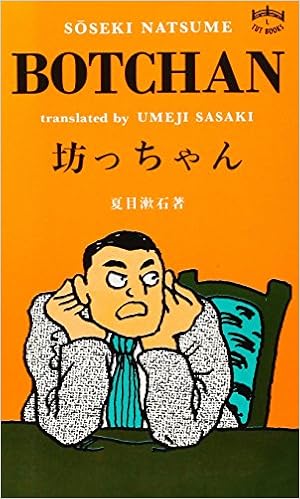
Though Botchan was written in the 1900’s the story rings true to date. The novel starts off with introducing Botchan, a morally upright, simple-minded and earnest character. He is a black or white person. For Botchan there is no such thing as a grey area, thus a lot of people find this specific character of his either fascinating or aggravating. Botchan was treated inappropriately by his parents and the only person who has shown admiration and care for his character and being was his old nurse, Kiyo.
After the death of his parents, he was left with enough money to go to school and study Physics. Botchan graduated and was then dispatched to the country side for work as a teacher for Mathematics. There he meets certain characters and situations that persistently tested his character. The prevailing question that surrounds the novel is the anticipation of whether the events that occur around Botchan would make him change his direction. Would he choose to overlook his principles in exchange of the possibility of being treated differently or being seen as an admirable person by society? Or will he forego all the opportunities just to stay true to who he really is?
Despite the novel being written in the 1900’s, many will find the politics surrounding the work environment of Botchan depicted in the novel very easy to relate to. All in all, the novel is a light and funny read with certain aspects tackling themes of morality that is still relevant and which I also believe should stay relevant for the sake of future generations.
I may not agree with some of Botchan’s reactions towards the injustices that he encountered but I admire the strength of his character depicted by Soseki. We need more people like Botchan in this world.
RATING: 3/5 Stars
 Musings of a Mushroom